
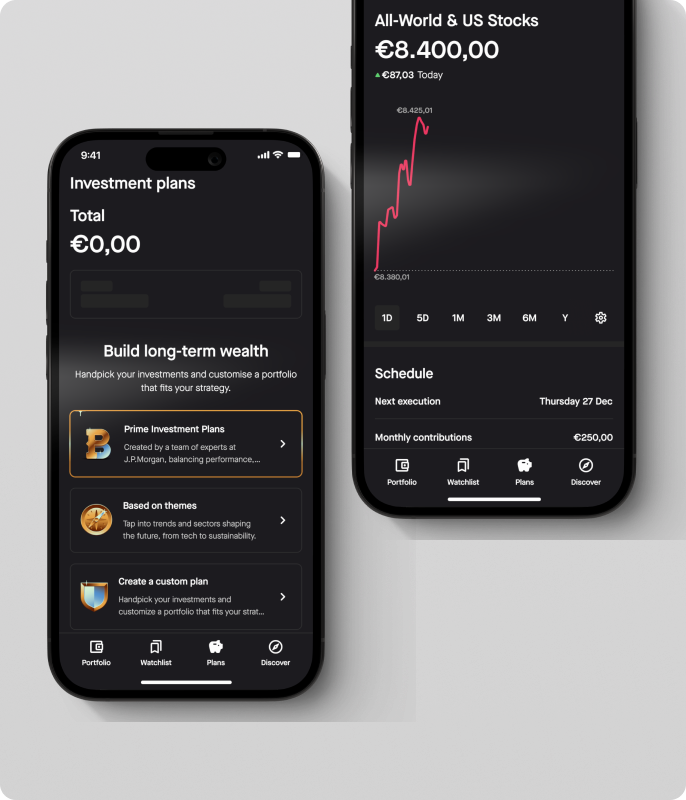
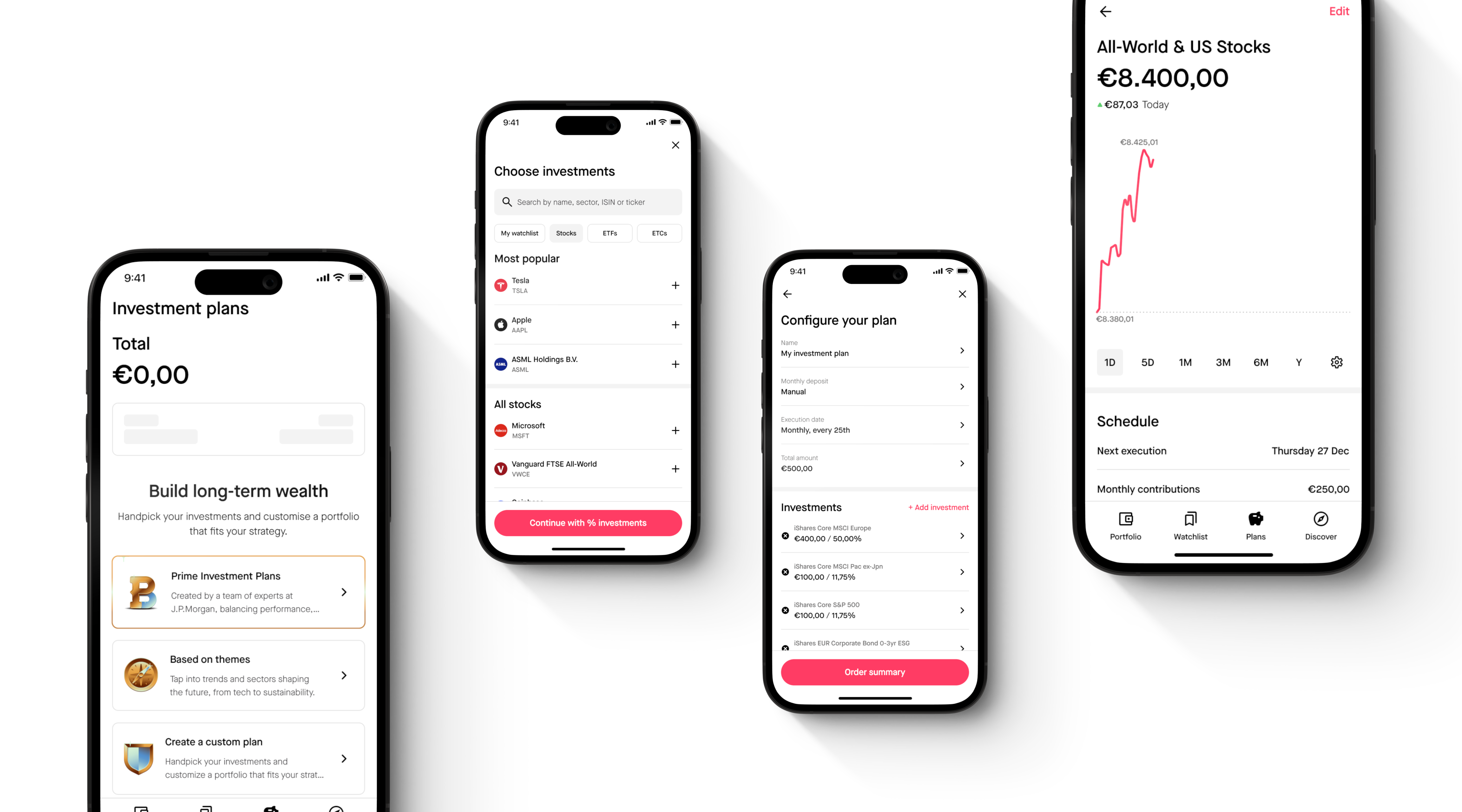
BUX was built for active trading. Investment Plans introduced a fundamentally different behaviour — recurring, automated, long-term investing — into a platform optimised for the opposite.
The challenge
1
Behavioural system design
Defined how plans are created, paused, resumed, and cancelled. Behaviour durability was the primary constraint — not activation.
2
PM-adjacent scope
Authored the PRD for the IVP navigation tab when product scope was undefined. A design decision had become a product decision nobody had formally made.
3
Multi-phase ownership
Owned design across four phases over four years. Each phase introduced new constraints that required the model to evolve without breaking what existed.
Users lacked discipline. Remove the friction, enforce the habit, and recurring investing would follow naturally.
75% cited DCA as their primary goal — but the top deletion reason was "needed funds." Intent was there. Financial reality kept getting in the way.
The problem wasn't automation. It was commitment anxiety — and that reframe touched every subsequent decision in the system.
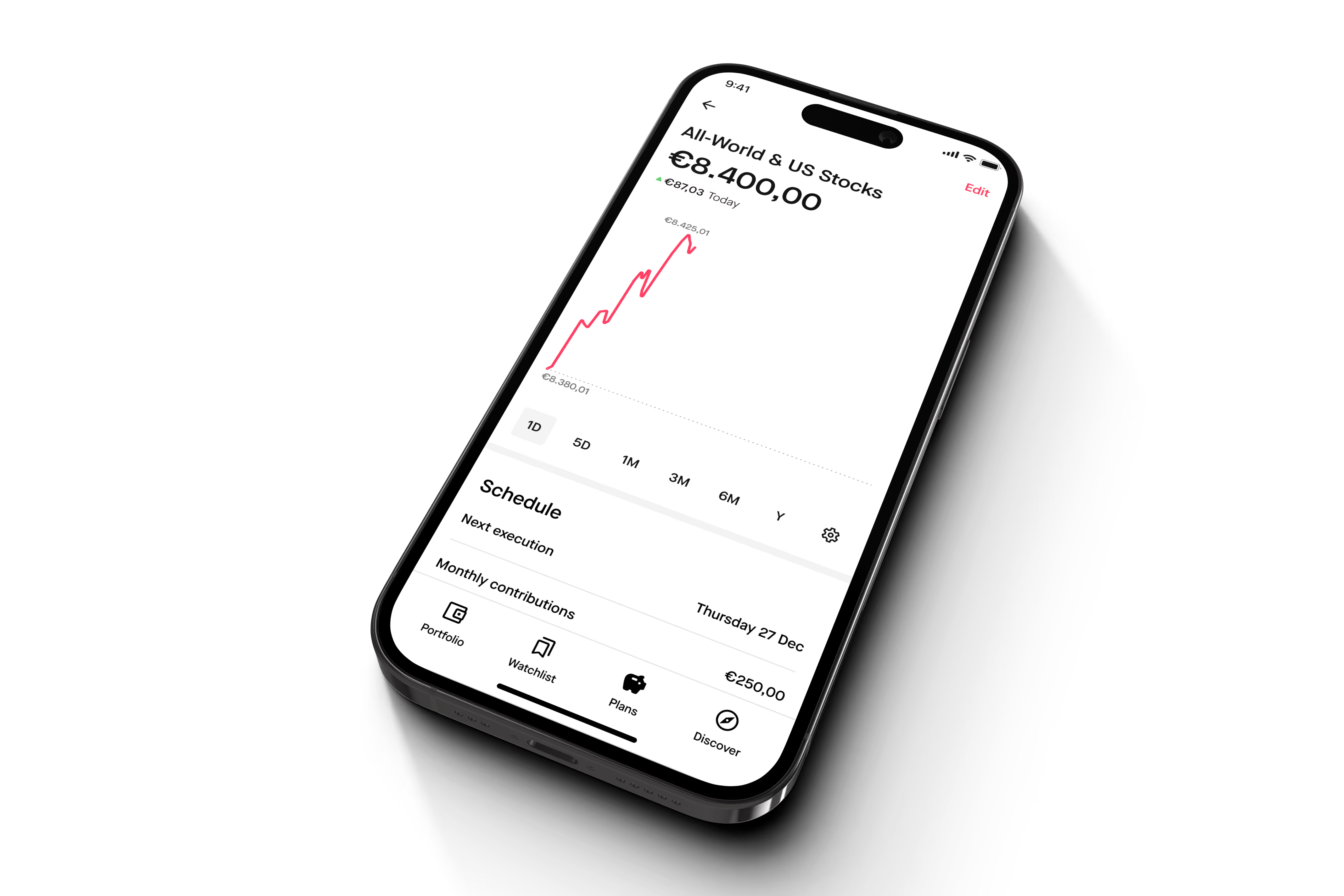
Following the navigation redesign and introduction of the tab layer
Following the navigation redesign and introduction of the tab layer
Following the navigation redesign and introduction of the tab layer